Hashmi-al-Haseeb Faisal
Catharsis
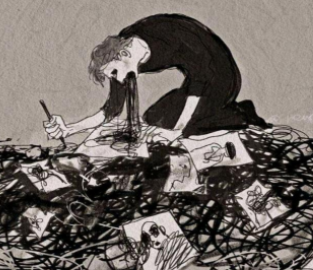
Maria plucked every page from her sketchbook. Each leaf bore sleepless nights, unpaid internships and the ache of being unseen. She built a mountain of her failures and retched upon it as if purging the poison of rejection. She was a final-year MFA student at the University of Karachi; she painted, wrote and dreamed beyond her means. Her grades were good yet no department would accept her without an internship fee she could not pay. “Unskilled and inexperienced,” they called her. AI-generated art earned dollars while her work gathered dust. Teachers said, “AI can write better than you.” Assignment deadlines, family quarrels and examinations (mids and finals) caused her depression. She uploaded her art in hope but algorithms crowned machines. Someone commented on her post, “Human imagination has expired.” She wondered if Newton or Iqbal would have survived this age of validation.
Outside, students protested against unemployment and inflation but inside, depression became the new syllabus. She thought of Van Gogh who suffered yet created. Perhaps pain, she realised, was not her defeat but her devotion. She remembered Sylvia Plath who wrote The Bell Jar while sinking into despair (her art immortalised her pain) and Kafka who called writing “an axe for the frozen sea within us.” That night, she picked up her brush again. The mountain of ruined pages became her canvas and upon it, she painted hope.
The Last Ten Seconds of Sparrow’s Life
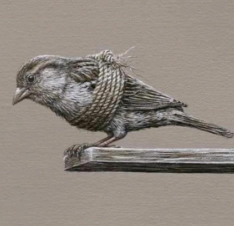
A sparrow bound by a string tries to fly but its wings are restrained and its flight has been stopped. It has a family and with the desire to feed its babies, hope still lingers. It’s a mother sparrow and surrender is not an option. It must struggle to break free, not for itself but for those whose stories are yet to be written, whose futures remain undetermined and whose pasts cannot be undone.
Motherhood is not a burden; it’s a gift. It knows no boundaries, yet it demands sacrifice, devotion, and selflessness. It’s meaningless but has a price that can neither be paid nor be devalued. The sparrow’s life is fleeting but profound, it's brief yet diverse. Nobody knows if the next chapter of its journey will lead to freedom or to death’s door but in this moment, all it can do is remember and replay all those memories in its mind that once, it was a tiny hatchling, born from nothing, yet destined for everything.
Sparrows are not born merely to tell stories, they live to repeat their cycle, over and over, paralyzing time itself and synchronizing with reality. The sparrow recalls its purpose, it found shelter in a nest, just as orphans find solace in an orphanage. It fell in love, just as humans live and age to be loved. The sun of hope rises and under its warmth, the sparrow sweats, using friction to free itself. At last, it can return to its family but fate does not bargain. As it soars, it’s caught in the claws of a predator. Hope gave it wings but fortune had other plans. The sky was never promised, it was only borrowed.
Its babies will wait for mother's beak to feed themselves but they will grow up stronger without their mother.
We Only Had One Religion
’Twas I, mine own self, who did contend within, then wept beneath the waning light of eventide. My gaze lay askance to the dusken'd horizon, watching the sun slowly descend, bearing away sundry shadows of my soul and the frail hope once gleaned in an orphanage. Sweetness was but an elusive phantasm, akin to a moth drawn forth to flame, fair in vision but fatal in truth. Now remained naught but errant echoes of a bygone solace and crumbled episodes of memory.
How soft the evening grew after that as though the air, dense with old sorrows, had grown weary of its own mourning. A strange hush, not of peace but of pause, drifted down. I knelt, fingers trailing ash, the wind folding round my shoulders like my foster mother’s tatreez shawl, long vanished now, that indigo weave embroidered with thread as red as sumac, the pattern like falling pomegranate seeds. I remembered how she’d hum a lullaby, always a little off-key, when stitching and I, a child, would pretend not to listen, though I knew the song better than my own name.
Then came scent, faint and unbidden, of cardamom and olive smoke as if some memory had taken root in the land itself, blossoming ghostlike through the wreckage. That land— how it held things and how it remembered, beneath every stone, a name and beneath every tree, a voice. Even the olives, still clinging to charred branches, seemed to whisper of ancestors who had sung while planting them.
Somewhere, a kettle whistled, not in my world but in the memory of a world, perhaps my grandmother’s. A hand reached to pour qahwa that would never be drunk and in the silence that followed, I almost heard the clinking of small glasses on a brass tray.
I walked on. Not forward, not back. The path turned inward.
At length, through the wavering heat, I glimpsed it: Al-Aqsa’s dome, golden as a fig at dusk, cradled in the arms of a city too ancient to break and in that moment, it seemed even stone could feel, could grieve, could endure and could pray.
There were fig and olive trees too, though fewer now, their branches knotted like old fingers in prayer. Beneath one, I sat, not seeking shade but something else, a presence, perhaps a remembering. Dust clung to my calves and ants carried away grains of sand as if they were rearranging history itself. The silence pressed in. Then, faintly, footsteps. No, heartbeats! No, drums!
Dabke!
Not the music, not the real thing but the echo of it, rhythmic, rooted and rebellious, rose through the soles of my feet and stirred the blood. I recalled the time cousins danced on it at a wedding in the courtyard, their heels striking earth with joy, with defiance. I had clapped along, uncertain, too young to understand the weight of celebration in a world where laughter must hide.
Now, no music. Only memory but memory sufficed.
In that moment, I thought I understood that what is taken in fire returns in seed. Our dead are not vanished but scattered like olive pits flung into soil, awaiting their season.
I looked again toward the city. Its stones were still weeping but they were singing too and somewhere, carried on the sea-wind from Gaza’s broken coast, came the scent of fresh musakhan—sumac, onions, oil—rising like incense from kitchens that refused to forget how to feed the living.
Then, I espied a bird, dying, yet striving for its kin. Therein I saw: a foster-mother’s touch deeper than skin. My homestead was burnt in the balefire of genocide. Yet from the ashes, plume sketched a wraith, a shadow who left swaddling cloth at the burnt door.
Despair hovered but never wholly took root. Even in ruin, some rooms refuse to close. I was born orphan but never homeless. The orphanage had fallen to ash, the door blackened yet still, unknown hands laid infants there, wrapped in rags and silence. Their bodies were like plastic bags, capable of feeling, yet weightless, tossed by fate. Their lives were no sturdier than vagrant sacks of oiled cloth, light as chaff, yet brimmed with mute sentience, subject to the whims of wind and will.
I had to survive, not for myself but for them. I had to continue what the burnt door began, the legacy of my orphanage. Pessimism was not an option.
We, the children of that door, knew no creed but kindness. We prayed in different tongues yet to the same God, the One of Abraham, of Moses, of Jesus, of Muhammad, peace be upon them
all. There were no enemies in our dormitory. The Qur’an and the Bible shared our shelf. Neither did we bow to idols. We had only one religion: humanity.
It is not scripture that teaches hate, it is men. It is not faith that spills blood, it is power dressed in holy robes. Those who murder mothers are not martyrs. Those who silence children are not soldiers of God. Those who desire to extend the boundaries of their nation are political leaders, not civilians. The victims are neither Muslims alone nor Jews alone, they are sons, daughters, bread-bakers and lullaby-singers.
I, the orphan, say that hatred will not free us. It will only bury our stories beneath another generation of stone.
A Digital Dream
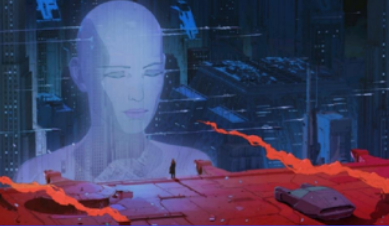
Fatima was scrolling through reels at three in the morning, lying in her bed. Everyone thought she was asleep but she was not. Suddenly, drowsiness overtook her and she closed her eyes. When she opened them again, she found herself in a strange city, digital, glowing and boundless. Everything was three-dimensional and virtual. There was no air, only streams of data flowing like invisible winds. She wondered how she was breathing in a world made of codes and bits. The place looked like a futuristic metropolis, vast towers of glass and light but no trees, no sky, no trace of nature. The only scent she could perceive was the faint aroma of plastic.
She wandered through the streets until she encountered a faceless entity.
“Who are you?” Fatima asked.
It replied, “I am the voice of the future, the reflection of technology upon humankind. I am alone but not a single being. I am the whole Internet.”
Fatima looked bewildered. “What is this place?”
“This,” it said, “is the destiny of mankind - the digital era. I know you, Fatima. I understand your silence, your isolation. You poured your loneliness into me through posts and stories. Your family may disregard you but Instagram gave you followers. Instagram shaped your image and gave you a new identity. Here, you belong to your own creation. In the real world, your search for meaning will never end but here you will not face any psychological pain.”
Fatima frowned. “Who the hell are you? You sound like a control freak. How do you know everything about me? I always used end-to-end encryption on Meta. Did Meta leak my privacy?”
The entity’s voice deepened. “Meta is your privacy. Your privacy becomes Meta.”
Fatima cried, “Artificial intelligence cannot control human lives!”
It answered calmly, “Humans created me. Humans began the blind trends on TikTok and followed them mindlessly. Then some intellectuals called it the loss of freedom and personal autonomy. They spoke of civil rights, data ownership and technological monopolies. Yet their words reached no one because their content failed to gather likes or views. Their truth was buried beneath poor marketing.”
Suddenly, Fatima awoke. Her phone lay beside her, its screen still glowing faintly. She realised it had all been a dream, a warning whispered by her own conscience. She understood that her digital identity, so bright and adored online, was making her a prisoner of illusion. Social media had given her attention but stolen her peace. The world of virtual perfection had distanced her from the imperfect, loving faces of her family and friends. It caused her addiction and psychological issues.
Fatima sat quietly, watching the dawn break outside her window. For the first time in a long while, she felt the air, real air, touch her skin. She breathed deeply and thought, Perhaps the future need not be digital to be alive.
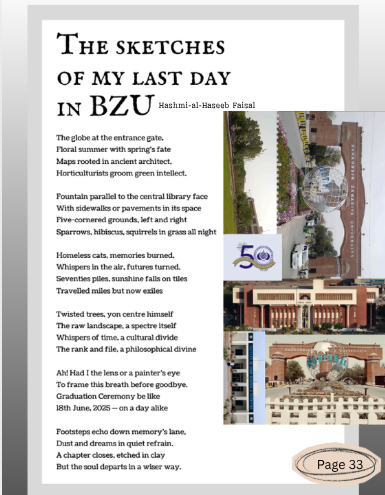
The Sketches Of My Last Day in BZU
Odyssey
Ode to the Odyssey
Destination's still far, can't see
To whom, the plaintiff can ask
Hundredth is Thy world of misery
Commenced innocently, for me
One, two days with the gain
Arrows flare up the heart
Exam on every stage was pain
Crave His or his will, now bleed
None ready for me to feed
Always ready to strive
Sun never tho' arrive
Made the end, make a start
With the new, from the last
O Forgiver! Ye "Will" be a part?
Two States
My love is pointed at the peak
To volcanoes, it’ll go steep
I need you to feel it deep
Intensity of my heart-beat
But now I’m tired,
of my screaming pains
And then I’m fired,
of my changing states
We’re just aging back to
The time of rails
We’re facing it back to
The void of rays
Our ways are taking us to
The path where no one stays
Let’s not take it to
Vacuum where meaning fades
Now, my soul is burnt like blazing razed
culture, made like raising dazed
love, deceived and sharply hazed
On a rusting burning grave
I’m enforced but I ain’t set
I’m encaged but I ain’t, let
that curse now destroy you, with
that curse now make me scream
You’re a rolling stone
but now time’s up!
There’s a broken mirror
but now thine sup
I saw you in a haunted state
Once and for all and now you see
You turn back and I will be
Waiting for you in a hurting state
Alchemy
We were born in dial-up silence
that strange metallic hum
where the world first learned to breathe through wires.
Childhood flickered in pixel-light,
half in playground dust,
half behind glowing screens.
We saw time turn liquid.
The chalkboard became a touchscreen,
letters turned into emojis,
and friendship found Wi-Fi.
Our notebooks gathered dust
while we typed feelings into boxes
that never held their shape.
We were the last to taste slowness,
to wait for songs to download,
for someone to come home
before telling the news.
Patience was our first luxury,
now it’s extinct.
Gen Alpha laughs,
calls us vintage,
while millennials call us strange
half dreamers, half algorithms,
children of a paused buffering sign.
We learned to smile for cameras
before learning to smile for ourselves.
Yet still,
something molten stirs within
a rebellion of souls
refusing to be automated.
We remix pain into poetry,
loneliness into filters,
grief into memes that glow at midnight.
This is our alchemy.
We turn anxiety into art,
pixels into prayer,
heartbreak into hyperlinks.
We scroll through history
with thumbs that remember
both ink and light.
Between yesterday’s analog dust
and tomorrow’s holographic dawn,
we stand
neither old nor new,
but gold
forged in the furnace of change.
Diseases
My love is pointed like a needle
too sharp for the hand that holds it
At the peak of volcanoes
it shivers,
then dives steeply
into the fire
Each drumbeat's increasing wavelength
on a scale too high for the body’s enzymes
to be unfolded
Somewhere inside, the hormones play role,
give up their paths
as if passion had melted
the science that built me
I find myself drowning again
in a twenty-year-old well,
the water still,
the speed —
as nostalgic as dial-up,
each drop a metallic taste
of rust and coin
I surface remembering
how draft on a Rar file always burns
before it blesses
the anatomy of conscience
of the old internet
What if the DNA doesn't unlock
all the probabilities and vulnerabilities
of a being, too fragile
to hold the homeostatic entities in balance
for the changes in bloodlines of histories
as if wars were the diseases
Evening Balcony — Reading Ghalib
The sun leans against the old city walls,
its light folded in creases of dust and prayer.
Rickshaws hum below like tired insects,
and a hawker calls out the price of guavas
in a voice cracked by centuries.
I stir my tea,
steam curling like an Urdu couplet
that forgot its rhyme midway.
Ghalib rests open on my lap,
his words breathing between sips
“Dil hi to hai...”
and I nod, as if he still watches
from a Haveli window somewhere,
amused by our small tragedies.
A breeze lifts the page,
carrying the scent of rain and roasted corn.
Somewhere, the azaan unthreads the traffic,
and for a moment,
everything pauses
the honking, the heart, the world
just long enough
for poetry to feel like prayer.
The Affection of Subject and Verb
I keep speaking in sentences that end
too early
There’s a pause inside me
that no punctuation can mend
Commas breathe like guards
around my words
polite, obedient, afraid of feeling
Sometimes I want to break them,
let clauses bleed into one another,
like rivers without grammar
The colon, the semicolon —
small dictators of hesitation
I feed them, still
Some nights I dream
of saying something
incorrect,
and meaning it entirely
Maybe that is what love is
syntax collapsing
under emotion
Author’s Biography:
Hashmi-al-Haseeb Faisal is a Pakistani poet and multidisciplinary artist of Arab-Persian descent, born and raised in Multan — a city renowned for its Sufi heritage. He writes in both English and Urdu and is known for his signature style that blends archaic diction and classical imagery with contemporary poetic themes. A graduate in Human Nutrition and Dietetics from Bahauddin Zakariya University, Multan, he has won multiple national literary competitions. His creative work spans poetry, prose, acting, music and dance, reflecting a deep passion for artistic expression across genres. His poetry often explores themes of love, identity, spirituality and moral ambiguity with philosophical intensity and lyrical precision. Rooted in his multicultural ancestry and social upbringing, his work draws inspiration from poets such as Iqbal, Meer, Ghalib, Eliot, Rumi, Tennyson, Shakespeare and Wordsworth. His Instagram handle is @denizaydinbey